
A Summer’s End – Hong Kong, 1986
Play A Summer’s End – Hong Kong, 1986
A Summer’s End – Hong Kong, 1986 Screenshots







A Summer’s End – Hong Kong, 1986 review
Dive into the Steamy Romance and 80s Hong Kong Vibes of This Iconic Game
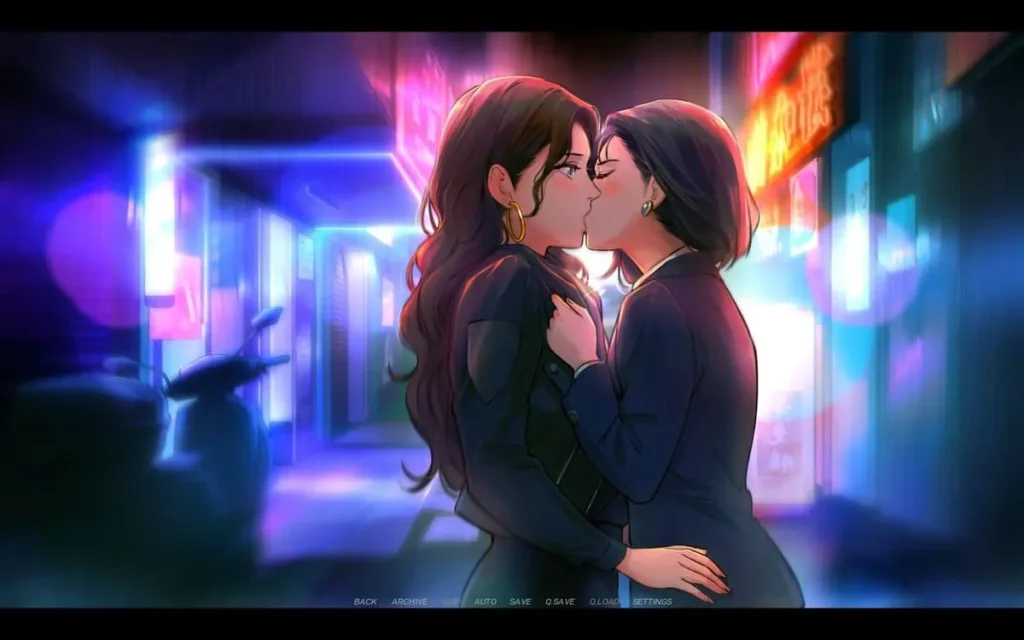
Imagine stumbling upon a chance encounter in the neon-lit streets of 1986 Hong Kong that sparks a forbidden romance between two women— that’s the heart of A Summer’s End – Hong Kong, 1986. This visual novel captivates with its lush 80s anime-inspired art, vaporwave soundtrack, and a story exploring love, identity, and family pressures in a changing city. I first played it during a rainy night, and the emotional pull between Michelle and Sam had me hooked, especially with the optional adult patch adding that extra layer of intimacy. Whether you’re here for the heartfelt narrative or the spicier scenes, this guide uncovers everything to enhance your experience.
What Makes A Summer’s End Hong Kong 1986 a Must-Play Romance?
I remember the exact moment I fell into the world of A Summer’s End – Hong Kong, 1986. It was a rainy afternoon, and I was scrolling through visual novels, looking for something with soul. The pixelated title screen loaded—a neon-drenched cityscape under a hazy sunset—and the synthwave soundtrack hummed through my headphones. In an instant, I wasn’t in my room anymore. I was transported. The humidity of a Hong Kong summer, the buzz of a city on the brink of change, the quiet ache of a personal story waiting to be told. That’s the magic trick this game performs so effortlessly.
But is it just a pretty piece of nostalgia? Far from it. A Summer’s End – Hong Kong, 1986 is a masterclass in emotional storytelling, wrapped in one of the most authentic historical settings I’ve ever experienced in a game. It’s a must-play romance not just for its heart, but for its incredible ability to make you feel a time and place. Let’s dive into why this iconic 1986 Hong Kong visual novel should be at the top of your list. ✨
Who Are Michelle and Sam and Why Do They Click? 💖
At its core, the beating heart of this game is the Michelle and Sam romance. It’s a relationship that feels less like a plot device and more like a real, fragile, beautiful thing you get to witness bloom.
Michelle is someone you might recognize. She’s pragmatic, a bit reserved, and caught in the comfortable monotony of her office job and family obligations. Her world is one of routine and unspoken expectations. Then there’s Sam. An artist who embodies a spirit of freedom and modernity that feels electric against Hong Kong’s 1986 backdrop. She’s confident, direct, and lives with a creative passion that both intimidates and fascinates Michelle.
So why do they click? It’s the classic spark of opposites attracting, but written with stunning nuance. Michelle finds in Sam a window to a life she never dared imagine—one of self-expression and bold choices. Sam, in turn, is drawn to Michelle’s grounded nature and hidden depths. Their conversations are a delicate dance of curiosity and caution. The game brilliantly uses its interactive dialogue to let you shape Michelle’s responses, making you an active participant in their growing bond. Will she be playful, shy, or defensive? Each choice nudges their relationship, making their eventual connection feel earned and deeply personal.
Playing through their story, I had a powerful “what if” moment. During a scene where Sam shows Michelle her artwork, I chose a response that was openly admiring rather than politely neutral. The shift in Sam’s expression, a small, genuine smile breaking through her usual cool demeanor, was a tiny reward that made their entire queer love story 80s narrative feel real. It’s in these subtle, player-driven interactions that their romance becomes yours.
How Does the 1986 Hong Kong Setting Bring the Story Alive? 🏙️
If Michelle and Sam are the heart, then 1986 Hong Kong is the soul. This isn’t just a backdrop; it’s a living, breathing character. The developers’ dedication to historical and cultural accuracy is nothing short of breathtaking, creating a powerful sense of place that fully immerses you.
The game masterfully contrasts two iconic locales. The Sai Kung and Mong Kok settings are more than just pixels; they’re emotional landscapes.
- Sai Kung: Here, the pace slows. The art depicts sweeping seascapes, tranquil fishing villages, and lush green hills. Scenes here feel like a deep breath—a respite from the city’s pressure. It’s where intimate conversations happen over dai pai dong noodles, with the sound of water and distant boats creating a romantic, almost dreamlike atmosphere. It represents possibility, escape, and the budding new world between our protagonists.
- Mong Kok: This is Hong Kong’s relentless pulse. The visuals hit you with a wall of neon signs, crowded market streets, and towering residential blocks. You can almost hear the cacophony of traffic, hawkers, and Cantonese pop music spilling from shopfronts. This setting embodies the weight of tradition, family, and societal expectation that Michelle navigates daily. The clash of old and new—traditional Chinese shops next to gleaming modern advertisements—mirrors her own internal conflict perfectly.
This isn’t just “scenery porn” (though it absolutely is gorgeous). Every backdrop tells a story. A shot of a crowded tram isn’t just filler; it’s a lesson in the city’s rhythm. A glimpse into a traditional family apartment, with its specific furniture and ancestral altar, speaks volumes about the cultural pressures shaping Michelle’s life. The Sai Kung and Mong Kok settings are essential narrative tools, making the themes of change and identity tangible.
Beyond the stunning visuals, the game is packed with authentic details that build the world:
- Hand-drawn Art Style: Every frame is a painstakingly crafted painting, evoking both the aesthetic of 80s anime and classic Hong Kong cinema.
- Iconic Soundtrack: The music, a perfect blend of synthwave, city pop, and traditional motifs, is a character itself. It swells in romantic moments and fades into ambient city noise with perfect pitch.
- Interactive Exploration: You often get to click around scenes, uncovering little bits of lore, character thoughts, and cultural tidbits that deepen your connection to the world.
Unlocking the Two Endings: Choices That Matter 🔑
One of the most compelling aspects of A Summer’s End – Hong Kong, 1986 is its elegant approach to player agency. Unlike visual novels with dozens of branching paths, this one focuses on a central, poignant question: Will Michelle find the courage to embrace her true self and her feelings for Sam?
This leads us to the game endings explained. There are two primary conclusions, and which one you reach depends entirely on the subtle choices you make throughout the story.
The game uses a point system tied to Michelle’s “Courage” and her “Connection with Sam.” Key dialogue choices and actions silently build these meters. Think of it as guiding Michelle’s heart and willpower. There’s no on-screen meter to distract you—the consequences unfold organically in the narrative.
Here’s a breakdown of the system:
| Your Choices Tend To Be… | What You’re Building | Impact on Story |
|---|---|---|
| Open, curious, supportive of Sam. Taking initiative. | Courage & Connection | Unlocks bonus romantic scenes, deepens intimacy, and steers toward the True Ending. |
| Reserved, defensive, focused on duty and avoiding risk. | Status Quo | Limits emotional growth, locks out deeper scenes, and leads to the Normal/Bad Ending. |
🔄 My Practical Advice for Your Playthrough: Save often at decision points! Don’t be afraid to follow your heart on a first blind playthrough—it’s the most authentic way to experience Michelle’s journey. Then, replay with a guide to see the beautiful content you might have missed. The game is concise enough that replaying for the other ending is a joy, not a chore.
Now, let’s talk about those final moments without major spoilers.
- The True Ending (The Romantic Path): This is the culmination of a playthrough where you’ve nurtured Michelle’s courage and her bond with Sam. It’s a profoundly satisfying and emotional conclusion that feels like a hard-won victory. It directly addresses the central tension of their queer love story 80s with hope and breathtaking tenderness. I’m talking about a specific, rain-soaked scene that left me genuinely breathless—it’s that powerful. 🥲
- The Normal Ending (The Separate Paths): If Michelle’s fears and obligations outweigh her courage, the story concludes on a note of poignant realism. It’s bittersweet, emphasizing the “what could have been” and the heavy weight of societal expectation. It’s not a “failure,” but rather a different, melancholic truth about the era and the personal cost of conformity.
The beauty is that both endings feel valid and thematically complete. They reinforce the game’s core question about choice, identity, and the price of love in a conservative time. Understanding these game endings explained isn’t about spoilers; it’s about appreciating the delicate narrative machinery that makes your choices genuinely meaningful.
This is why A Summer’s End – Hong Kong, 1986 transcends being a simple love story. It’s a historical snapshot, a personal awakening, and an interactive piece of art. It proves that a visual novel can be a powerful vehicle for cultural reflection and deep emotional connection. Whether you’re here for the flawless 1986 Hong Kong visual novel vibes, the unforgettable Michelle and Sam romance, or just a story that stays with you long after the credits roll, this summer is one you need to experience for yourself.
FAQ: Your Quick Guide to A Summer’s End – Hong Kong, 1986
| Question | Answer |
|---|---|
| What’s the basic plot without spoilers? | It’s 1986 Hong Kong. You follow Michelle, a young office worker, whose routine life is turned upside down when she meets Sam, a free-spirited artist. Over one humid summer, their unexpected friendship deepens into a powerful romance, forcing Michelle to navigate her feelings amidst family expectations and a society on the cusp of change. |
| Is the romance the main focus? | Absolutely. The growing relationship between Michelle and Sam is the central engine of the story. However, their personal journey is intimately woven into the rich tapestry of 1980s Hong Kong culture, making the setting and the romance inseparable and equally important. |
| Is it worth replaying? | 100% yes. With two distinct endings and a point system that unlocks special bonus scenes, a second playthrough is highly rewarding. Seeing how different choices alter the tone and outcome of key moments provides a much deeper appreciation for the story’s design and characters. |
A Summer’s End – Hong Kong, 1986 wraps you in a nostalgic haze of 80s vibes, heartfelt connections, and those pivotal choices that define Michelle and Sam’s journey. From the vibrant streets to the intimate moments, it masterfully blends story with emotion, making every playthrough personal. If you haven’t dived in yet, grab it now—toggle that adult patch for deeper rewards, experiment with paths, and let the romance unfold. Share your favorite ending in the comments; I’d love to hear how it hit you. Time to relive that summer magic.