
Love and Submission
Play Love and Submission
Love and Submission Screenshots






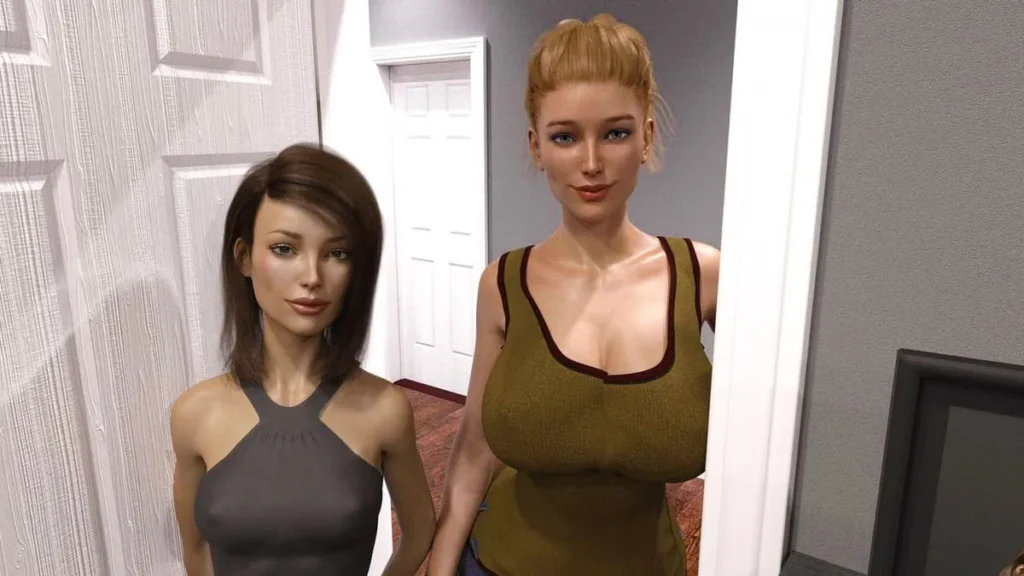






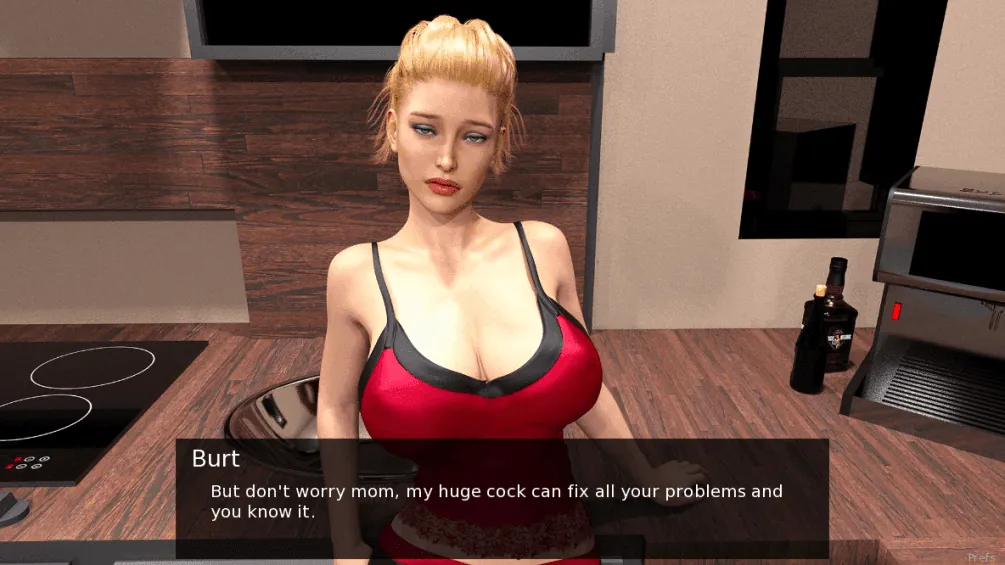
Love and Submission review
Explore gameplay mechanics, story paths, and system requirements for this choice-driven narrative experience
Love and Submission is a narrative-driven game that offers players meaningful choices in shaping their experience. After returning home from traveling through Asia, you reconnect with family and navigate a world transformed by time and change. The game presents two distinct relationship paths—romantic or alternative—allowing your decisions to fundamentally alter the story, characters you meet, and experiences you encounter. With multiple story branches, character interactions, and over 550 renders across various paths, this game emphasizes player agency and consequence-driven storytelling. Whether you’re interested in relationship simulation games or choice-based narratives, understanding the game’s mechanics and features helps you maximize your gameplay experience.
Gameplay Mechanics and Story Paths
Let’s be honest—we’ve all played story games where our “big, important choice” amounts to a slightly different line of dialogue before everyone ends up in the same place. It can feel like your decisions don’t really matter. 😒 Well, Love and Submission is here to shatter that expectation. This choice-based narrative game is built on a simple, powerful promise: every click, every dialogue option, and every relationship decision fundamentally reshapes your journey. It’s a true branching story game where the player choice consequences are not just cosmetic; they determine which characters you meet, the scenes you experience, and the ultimate fate of your story.
The entire Love and Submission gameplay mechanics revolve around this philosophy of meaningful agency. You’re not just reading a visual novel; you’re actively authoring it through your actions. The game tracks your moral compass, your romantic inclinations, and your personal boundaries, weaving them into a narrative tapestry that is uniquely yours. This guide will dive deep into the engine of this experience, breaking down the paths you can walk and the outcomes you can create.
Understanding the Two Relationship Paths
At the very heart of Love and Submission lies its central, defining mechanic: the fork in the road between two core relationship paths in games. This isn’t a minor subplot; it’s the primary axis around which the entire narrative spins. From the earliest chapters, your interactions begin to tilt the scale toward one of two fundamentally different dynamics.
I remember my first playthrough. I went in wanting a sweet, traditional romance. I was polite, respectful, and chose all the supportive options. The game rewarded that consistency by gently guiding me down what the community calls the Loving Path. The tone was one of mutual affection, deepening emotional connection, and partnership. It felt fulfilling and heartwarming.
Then, out of curiosity, I replayed an early chapter. Just for fun, I decided to be a bit more assertive, to test the boundaries of the dialogue system. I chose options that were more dominant, more teasing, and less conventionally “nice.” To my surprise, the game didn’t just give me a negative response—it acknowledged my shift in attitude. Characters reacted differently. New scenes, ones I hadn’t even glimpsed before, started to unlock. I had inadvertently stepped onto the Alternative Path. The same core story beats were there, but the emotional context, the power dynamics, and the character motivations were completely altered. It was like playing a different game with the same cast! 🤯
This dual-path system is the brilliant core of the Love and Submission gameplay mechanics. The game is meticulously crafted so that renders, scenes, and character development are split across these avenues. Pursuing one path often means certain characters or subplots remain in the shadows, only to be discovered on a subsequent playthrough. It makes each journey feel distinct and personally curated.
To help visualize the profound divergence between these routes, here’s a breakdown:
| Aspect | The Loving Path | The Alternative Path |
|---|---|---|
| Core Dynamic | Built on mutual respect, emotional intimacy, and progressive romantic commitment. It focuses on partnership and growing together. | Centers on a more intense, power-driven dynamic with elements of control, teasing, and challenging traditional boundaries. |
| Primary Themes | Trust, vulnerability, support, and building a future. | Desire, challenge, authority, and redefining connections. |
| Character Availability | Certain characters who value stability and deep emotional bonds will have more prominent roles and extended story arcs. | Different characters, who thrive on or respond to a more dominant dynamic, will become central, with some from the Loving Path receding. |
| Scene & Content Focus | Scenes emphasize tender moments, heartfelt conversations, and romantic milestones. The “payoff” is emotional fulfillment. | Unlocks scenes focused on tension, games of will, and scenarios that explore a different spectrum of the relationship. The “payoff” is often about conquest or transformative influence. |
| Overall Narrative Outcome | Leads to endings that resolve with harmony, committed partnership, and often more traditionally “happy” conclusions for those involved. | Leads to endings that are more complex, ambiguous, or focused on a different kind of fulfillment, often involving a reshaped social hierarchy. |
How Player Choices Impact Your Experience
So, how does the game know which path you’re on? 🧐 The magic—and the depth—of Love and Submission is in its silent ledger. This isn’t a game with a obvious “morality meter” in the corner of the screen. Instead, it uses a sophisticated, behind-the-scenes tracking system that records the subtle nuances of every decision you make.
Think of it like this: every major character has an invisible relationship score with you, and the world itself has a “path alignment” value. Your choices adjust these numbers. But it’s more than just “nice” vs. “mean.” The system recognizes:
* Tone: Are you playful or serious? Submissive or assertive?
* Values: Do you prioritize honesty, ambition, loyalty, or independence?
* Actions: Who do you defend? Who do you ignore? What promises do you keep?
These player choice consequences ripple outwards in incredible ways. Here’s a practical example from my playthroughs. In one early episode, you can choose how to handle a conflict between two side characters. On my Loving Path run, I mediated peacefully, which later led to both characters becoming reliable allies in a community event. On my Alternative Path run, I exploited the conflict for my own advantage, which made one character fiercely loyal to me (out of dependence) and turned the other into a rival. The same initial event spawned two entirely different subplots!
This is what makes it a masterclass in branching story game design. The impact is substantial. You might find entire locations or parties becoming accessible or locked off based on your reputation. A character you were close to on one path might be cold and distant on another, not because the game is punishing you, but because your prior actions have logically changed how they perceive you.
Pro Tip: Don’t try to “game” the system on your first run by picking options at random. The most rewarding way to experience Love and Submission is to role-play authentically. Make choices that feel true to the character you want to be in this world. The narrative cohesion and emotional payoff will be far greater. You can always experiment later! ✨
The game reinforces this through its interface. Your quest log is more than a simple checklist; it’s a chapter-by-chapter diary of your key decisions and their immediate outcomes. Checking it regularly can give you clues about where your alignment is leaning. Furthermore, the game’s design intentionally splits visual renders and scenes. You will literally see different images and animations depending on your path, making a second playthrough visually fresh, not just narratively different.
Story Progression and Game Endings
The journey through Love and Submission is episodic, with each new update adding chapters to an ongoing saga. Your story progression isn’t linear—it’s a branching tree where you can only travel down one limb at a time. The game saves a comprehensive profile of every choice you’ve ever made, and this profile is referenced in every new scene, ensuring continuity and consequence across what could be months of real-time play between updates.
Reaching an ending in this choice-based narrative game is a process of culmination. The game doesn’t have a single “final scene” that everyone sees. Instead, you have a final scene for your specific path. The narrative builds methodically toward a climax that is thematically consistent with the relationship dynamic you’ve cultivated over dozens of hours. This means the Love and Submission story endings are deeply personalized. An ending on the Loving Path will provide closure centered on love and partnership, while an ending on the Alternative Path will resolve its unique tensions and power struggles.
This leads us to the million-dollar question: how to unlock all content Love and Submission? 🗝️
The honest answer is: you can’t do it in one go, and that’s the point. The game’s design philosophy is built on the value of replayability. To see everything—every character arc, every romantic scene, every piece of stunning artwork—you must engage in multiple playthroughs.
Here’s my practical, actionable strategy for experiencing the full breadth of the game:
- The Authentic First Run: Play instinctively. Don’t save-scum (constantly reloading to try different choices). Commit to your decisions and see where your story goes. This will give you a genuine, emotionally resonant ending.
- The Deliberate Second Run: Start a fresh save and consciously walk the opposite primary path. Make choices that are diametrically opposed to your first run. This will feel the most different and reveal the bulk of the content you missed.
- The Completionist Runs: Use dedicated saves to explore specific character-focused branches or to make different key decisions at major branching points (e.g., “What if I sided with Character A instead of Character B at the Midterm Crisis?”).
- Use the Quest Log as a Guide: After completing an episode, check your quest log. It often lists “Episode Endings” as objectives. If you see one marked as incomplete, you know that a major alternate outcome exists for that chapter, hinting at a branch worth exploring on a future run.
The beauty of this system is that no two playthroughs are ever the same. Because renders and scenes are exclusive to paths, your second time through will have a high percentage of new visuals, making it feel substantially fresh. It’s the opposite of a grind; it’s a new adventure with familiar faces in unfamiliar roles.
Frequently Asked Questions
Q: I’m worried about missing out on content. Should I use a walkthrough on my first play?
A: I strongly advise against it for your first run! 🔒 The magic of Love and Submission is in the discovery and living with your choices. Using a guide robs you of that personal connection to the story. Embrace the unknown—you can always use community guides for your later, more targeted completionist runs.
Q: How do I know for sure which path I’m on?
A: The game doesn’t label it explicitly, but you’ll know by the tone of the scenes and character reactions. Review the comparison table above. If your story feels more like a romantic drama, you’re on the Loving Path. If it feels more like a tense psychological drama with power plays, you’re on the Alternative Path. Your quest log clues also hint at your alignment.
Q: Can I switch paths midway through the game?
A: The game is designed around consistency, but it is possible for your choices to gradually shift the narrative’s direction. However, a hard, mid-game switch from one extreme path to the other is unlikely and would feel narratively jarring. Major branching points usually happen at key episodes, offering a natural reset point if you want to change direction.
Q: What’s the best way to experience all the Love and Submission story endings?
A: The only way is through multiple saves and playthroughs. Treat each save file as a distinct “universe.” Create one for your pure Loving Path, one for your pure Alternative Path, and maybe a third or fourth where you make one or two different critical decisions to see how the story diverges from a specific point.
Q: Is there a “true” or “canon” ending?
A: No, and that’s the beauty of it. 🎭 The developers have stated that all endings born from consistent player choices are valid conclusions to that particular story. Your “true” ending is the one that feels most satisfying for the journey you undertook.
Ultimately, the Love and Submission gameplay mechanics empower you to be the author. Its status as a premier branching story game is earned through a system where player choice consequences are tangible, meaningful, and beautifully far-reaching. By understanding the two core relationship paths in games and embracing the need for multiple journeys, you unlock not just all the content, but the profound satisfaction of seeing a virtual world reshape itself entirely around the persona you choose to embody. It’s a captivating experience that reminds us why choice-based narrative games are so powerful.
Love and Submission delivers a compelling choice-driven narrative experience where your decisions genuinely shape the story you experience. With two distinct relationship paths, branching storylines, and over 550 renders distributed across multiple narrative branches, the game encourages exploration and multiple playthroughs to discover all available content. Understanding the gameplay mechanics helps you make informed choices that align with your preferred relationship path, while knowing the technical requirements ensures smooth installation and optimal performance. Whether you’re drawn to relationship simulation games or narrative-heavy experiences with meaningful player agency, Love and Submission offers substantial replay value and consequence-driven storytelling. Take time to explore all available paths, utilize the included walkthrough for guidance, and experience how your choices create a uniquely personalized gaming experience.